
What is the mesenchymal to epithelial transition?
What is the mesenchymal-epithelial transition? During development, the transitioning of epithelial cells to a mesenchymal lineage is not an irreversible process. Instead, a number of developmental programs are accompanied by a reversal of EMT, [...]
What is hematopoiesis?
What is hematopoiesis? The hematopoietic system, which comprises all the cellular components of the blood, is one of the earliest organ systems to evolve during embryo development. Hematopoietic stem cells (HSCs), which are rare [...]
What is the cellular origin of hematopoietic stem cells?
What is the cellular origin of hematopoietic stem cells? Based on findings from a large number of anatomical, biochemical, and genetic studies carried out over the years, three major theories have been put forth [...]
What are cell-cell adhesions?
What are cell-cell adhesions? Cell-cell signaling refers to inter-cellular communication through the transduction of chemical, mechanical or electrical signals, facilitated by the formation of specialized cell-cell adhesion junctions. There are three main types of [...]
How are cell-cell adhesions regulated?
How are cell-cell adhesions regulated? Introduction to the regulation of cell-cell adhesion The assembly and disassembly of cell-cell junctions, such as adherens junctions (AJ), are regulated by a vast array of factors functioning in [...]
How is hematopoiesis regulated by mechanics?
How is hematopoiesis regulated by mechanics? Once blood circulation is established during the earliest stages of hematopoiesis, the pulsatile nature of blood flow within the aorta generates a range of biomechanical forces, such as [...]
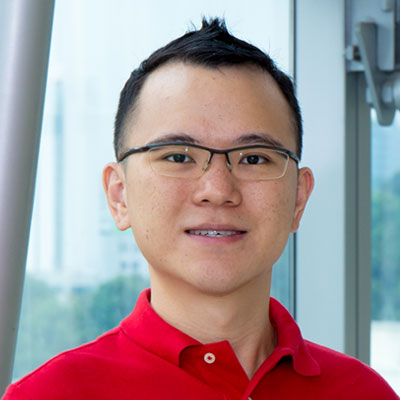
Ding Wei Yung
Alumni
Principal Investigator
Research Interests
Cell-Matrix and Cell-Cell Mechanotransduction, Molecular Mechanisms of Mechanobiology
Wei Yung’s interest lies in understanding the sophistication of cells as robust machines. Using C. elegans, a 1mm nematode, as a model system, he investigates the cellular machinery underlying newly fertilized zygotes that drives critical force-dependent processes such as polarization and cytokinesis.
Biography
Wei Yung completed his Bachelor’s degree in Bioengineering (Second Class Upper) from the National University of Singapore in 2012. In his honors dissertation under the co-supervision of Professor James Goh and Professor Wong Hee Kit, he optimized the conditions required for the construction of interbody spinal fusion device using primary adipose stem cells seeded in a biodegradable polycaprolactone/tricalcium sulphate (PCL/TCP) scaffold. The work was presented in the Bioengineering Showcase 2012 and he was awarded the Best Poster Award. After he was enrolled in the Mechanobiology Graduate Program, he joined Dr. Zaidel-Bar’s Cell Adhesion and Morphogenesis Lab and is currently searching for novel genes involved in regulating C. elegans early embryogenesis.