
What is the plasma membrane?
What is the plasma membrane? Plasma membranes are subcellular structures, approximately 10nm thick, that form a protective boundary around the cell as well as the cell’s organelles. They serve to both impede foreign material [...]
How do mechanically-gated ion channels facilitate mechanotransduction?
How do mechanically-gated ion channels facilitate mechanotransduction? Mechanotransduction relies on the ability of cells to convert mechanical cues, such as stretch or compression, to biochemical signals. One way this occurs is through the activity [...]
How do lipid bilayer components move?
How do lipid bilayer components move? One of the tenets of the Fluid-Mosaic membrane model is that the components of the bilayers are free to move. Before describing the differences between lipid and protein [...]
Why are membrane lipids asymmetrical?
Why are membrane lipids asymmetrical? The human red blood cell is functionally specialized for transporting oxygen. In order to maximize oxygen capacity, it has no nucleus or organelles, consisting primarily of plasma membrane and [...]
How is clathrin recruited to the plasma membrane?
How is clathrin recruited to the plasma membrane? Clathrin-mediated endocytosis is triggered by phosphatidylinositol-4,5-bisphosphate (PIP2) accumulation within the plasma membrane. PIP2 accumulates as a result of phosphoinositide catalysis by the lipid kinases, phosphatidylinositol-4-kinase (PI4K) [...]
What is clathrin-mediated endocytosis?
What is clathrin-mediated endocytosis? Clathrin-mediated endocytosis (CME) is a vesicular transport event that facilitates the internalization and recycling of receptors engaged in a variety of processes, including signal transduction (G-protein and tyrosine kinase receptors), [...]
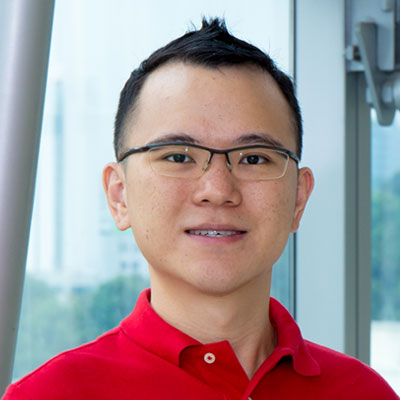
Ding Wei Yung
Alumni
Principal Investigator
Research Interests
Cell-Matrix and Cell-Cell Mechanotransduction, Molecular Mechanisms of Mechanobiology
Wei Yung’s interest lies in understanding the sophistication of cells as robust machines. Using C. elegans, a 1mm nematode, as a model system, he investigates the cellular machinery underlying newly fertilized zygotes that drives critical force-dependent processes such as polarization and cytokinesis.
Biography
Wei Yung completed his Bachelor’s degree in Bioengineering (Second Class Upper) from the National University of Singapore in 2012. In his honors dissertation under the co-supervision of Professor James Goh and Professor Wong Hee Kit, he optimized the conditions required for the construction of interbody spinal fusion device using primary adipose stem cells seeded in a biodegradable polycaprolactone/tricalcium sulphate (PCL/TCP) scaffold. The work was presented in the Bioengineering Showcase 2012 and he was awarded the Best Poster Award. After he was enrolled in the Mechanobiology Graduate Program, he joined Dr. Zaidel-Bar’s Cell Adhesion and Morphogenesis Lab and is currently searching for novel genes involved in regulating C. elegans early embryogenesis.