
What are the steps in the formation of transverse arcs?
What are the steps in the formation of transverse arcs? In general, initiation of stress fiber formation is modulated by signaling cascades involving RhoA small GTPase [1] (reviewed in [2]). Most G-actin polymerization is [...]
What are the steps in ventral stress fiber formation?
What are the steps in ventral stress fiber formation? Recent data suggests that ventral stress fibers are created by reorganizing pre-existing dorsal stress fibers and transverse arcs [1].Other contrasting models for the formation of [...]
How is stress fiber assembly regulated?
How is stress fiber assembly regulated? Tension-dependent actin polymerization and assembly of stress fibers is influenced by many factors (reviewed in [1][2]), including differences in substrate composition [3], rigidity [4][5][6] (reviewed in [7]), cell [...]
What is axon guidance and the growth cone?
What is axon guidance and the growth cone? Axon guidance is an important step in neural development. It allows growing axons to reach specific destinations and ultimately form the complex neuronal networks throughout the [...]
What are Motor Proteins?
What are Motor Proteins? Motor proteins, such as myosins and kinesins, move along cytoskeletal filaments via a force-dependent mechanism that is driven by the hydrolysis of ATP molecules (reviewed in [1]). Nucleotide hydrolysis and [...]
How do motor proteins transport cargo along the cytoskeleton?
How do motor proteins transport cargo along the cytoskeleton? Along with providing structural support to the cell, and transmitting force signals, cytoskeletal filaments also provide cells with a network of ‘tracks’ that can be [...]
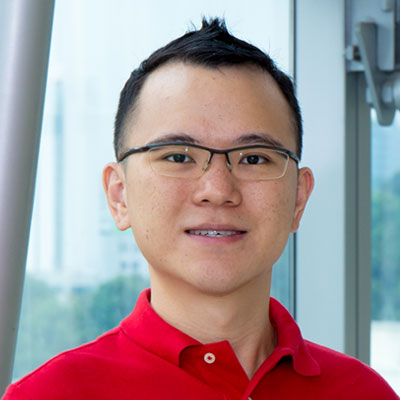
Ding Wei Yung
Alumni
Principal Investigator
Research Interests
Cell-Matrix and Cell-Cell Mechanotransduction, Molecular Mechanisms of Mechanobiology
Wei Yung’s interest lies in understanding the sophistication of cells as robust machines. Using C. elegans, a 1mm nematode, as a model system, he investigates the cellular machinery underlying newly fertilized zygotes that drives critical force-dependent processes such as polarization and cytokinesis.
Biography
Wei Yung completed his Bachelor’s degree in Bioengineering (Second Class Upper) from the National University of Singapore in 2012. In his honors dissertation under the co-supervision of Professor James Goh and Professor Wong Hee Kit, he optimized the conditions required for the construction of interbody spinal fusion device using primary adipose stem cells seeded in a biodegradable polycaprolactone/tricalcium sulphate (PCL/TCP) scaffold. The work was presented in the Bioengineering Showcase 2012 and he was awarded the Best Poster Award. After he was enrolled in the Mechanobiology Graduate Program, he joined Dr. Zaidel-Bar’s Cell Adhesion and Morphogenesis Lab and is currently searching for novel genes involved in regulating C. elegans early embryogenesis.