

BACTERIAL PATHOGENESIS & SIGNAL TRANSDUCTION LAB
Linda J Kenney’s laboratory employs interdisciplinary approaches to understand environmental signaling in bacteria, host specificity of bacterial pathogens, gene silencing and relief of silencing in Salmonella
Recent Featured Research
Seeking Research Fellow in Cardiac Organoids and Microphysiological Systems at the Mechanobiology Institute, NUS
The laboratory of Prof. Hanry Yu seeks to to recruit a Research Fellow in Cardiac Organoids and Microphysiological Systems at the Mechanobiology Institute, NUS.

Xiangfu Guo
Research Fellow, Yan Jie Group
Chu Đặng Khánh Hoà
Research Assistant, Dye & Michelot Groups
Seeking Postdoctoral Fellow in the Chan Laboratory at the Mechanobiology Institute, NUS
Asst. Prof. Chan seeks to to recruit a Postdoctoral Fellow in the Chan Laboratory at the Mechanobiology Institute, NUS.
Koya Yoshizawa
Research Fellow, Zhu Group

Seeking Communications & Events Associate at the Mechanobiology Institute, National University of Singapore
The Mechanobiology Institute (MBI), National University of Singapore (NUS), is seeking to recruit a Communications & Events Associate.
KENNEY LABORATORY RESEARCH
The Kenney laboratory is dedicated to solving important problems in bacterial mechanotransduction related to pathogenesis.
Bacterial pathogenesis involves the programmed changes in gene expression to evade host defense systems through sensing the host environment both physically and chemically.
Research

KENNEY LABORATORY RESEARCH
In bacteria, signal transduction occurs largely via two-component regulatory systems. These systems employ an inner membrane histidine kinase (the sensor) and a cytoplasmic response regulator. Environmental sensing is in most cases directly coupled to regulation of gene expression.
The two components communicate via a series of phosphorylation/ phosphotransfer reactions. The sensor kinase is autophosphorylated by ATP at a conserved histidine residue upon activation by environmental stress. The sensor kinase then transfers the phosphoryl group to a conserved aspartate on the response regulator. Phosphorylation of the response regulator often increases its affinity for DNA leading to transcriptional activation or repression, depending on the mode of action.
KENNEY LABORATORY RESEARCH CONT.
The EnvZ/OmpR system that we study responds to osmotic changes and controls the expression of the outer membrane proteins OmpF and OmpC. OmpR is an important global regulator and plays a major role in regulating virulence genes in many pathogens, including Salmonella, Yersinia, Shigella and E. coli.
A central question in the EnvZ/OmpR two-component system that we study (and an unanswered question in most other sensor kinases as well) is how does a change in the osmolality of the external environment (the signal) result in the differential regulation of outer membrane porin gene expression (the output)?
Current Projects
RECENT WORK
The Kenney laboratory is interested in signal transduction and the regulation of gene expression in prokaryotes. In particular, we are studying the two-component regulatory system EnvZ/OmpR that regulates the expression of outer membrane proteins as well as many other genes.
Our present work focuses on how OmpR activates genes required for systemic infection (located on Salmonella pathogenicity island 2) in Salmonella enterica.
Current Projects

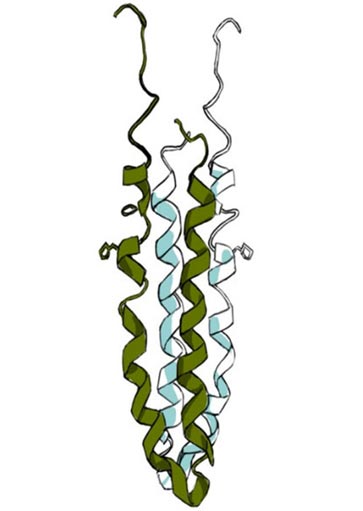
Structural Analysis of SPI-2 needles
Using cryoelectron microscopy to perform structural analysis of the macromolecular complex of the SPI-2 secretory apparatus
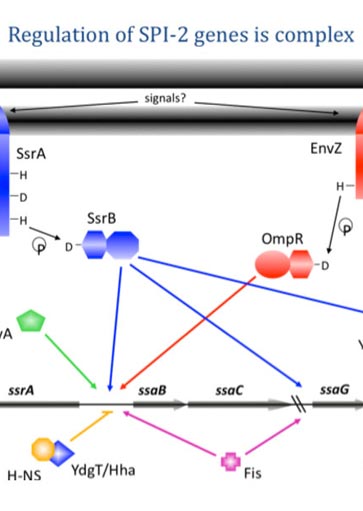
Silencing and Anti-Silencing in Salmonella Pathogenesis
Characterizing the binding properties of the H-NS homologue StpA
The Mechanism of Osmosensing by EnvZ and other HKs
Mapping conformational changes in EnvZ associated with osmotic stress
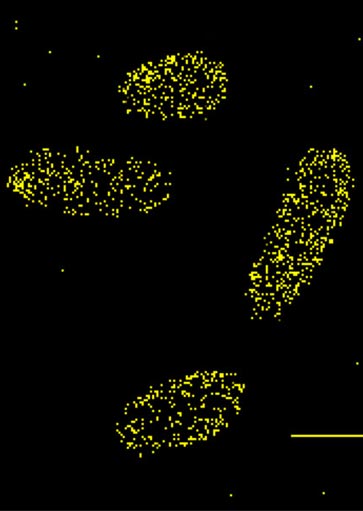
Super-Resolution Microscopy of EnvZ, OmpR, H-NS, and Chromosomal Imaging
Examining OmpR/DNA interactions using PALM
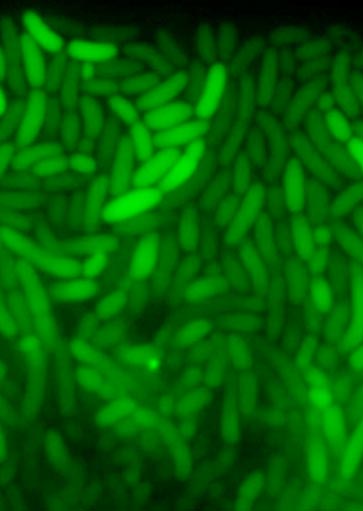
Porin Gene Transcription in Single Cells
Transcription of GFP enables us to see how expression levels change in response to osmolality
Recent Publications
- Fernandez M, Yamanaka Y, Zangoui P, White MA, and Kenney LJ. The sulfur assimilation pathway mitigates redox stress from acidic pH in Salmonella Typhi H58. mBio 2025;:e0046725. [PMID: 40422406]
- Shetty D, and Kenney LJ. A pH-sensitive switch activates virulence in Salmonella. Elife 2023; 12. [PMID: 37706506]
- Oh D, Liu X, Sheetz MP, and Kenney LJ. Small, Dynamic Clusters of Tir-Intimin Seed Actin Polymerization. Small 2023;:e2302580. [PMID: 37649226]
- Mon KKZ, Si Z, Chan-Park MB, and Kenney LJ. Polyimidazolium Protects against an Invasive Clinical Isolate of Salmonella Typhimurium. Antimicrob Agents Chemother 2022;:e0059722. [PMID: 36094258]
- Jacob H, Geng H, Shetty D, Halow N, Kenney LJ, and Nakano MM. Distinct Interaction Mechanism of RNAP and ResD and Distal Subsites for Transcription Activation of Nitrite Reductase in Bacillus subtilisψ. J Bacteriol 2021;:JB0043221. [PMID: 34898263]
- Singh MK, Zangoui P, Yamanaka Y, and Kenney LJ. Genetic code expansion enables visualization of Salmonella type three secretion system components and secreted effectors. Elife 2021; 10. [PMID: 34061032]
- Kenney LJ, and Anand GS. EnvZ/OmpR Two-Component Signaling: An Archetype System That Can Function Noncanonically. EcoSal Plus 2020; 9(1). [PMID: 32003321]
- Desai SK, and Kenney LJ. Switching Lifestyles Is an in vivo Adaptive Strategy of Bacterial Pathogens. Front Cell Infect Microbiol 2019; 9:421. [PMID: 31921700]
- Desai SK, Padmanabhan A, Harshe S, Zaidel-Bar R, and Kenney LJ. Salmonella biofilms program innate immunity for persistence in Caenorhabditis elegans. Proc. Natl. Acad. Sci. U.S.A. 2019;. [PMID: 31160462]
- Ottemann KM, and Kenney LJ. Editorial overview: Host-pathogen interactions: bacteria. Curr. Opin. Microbiol. 2019; 47:iii-v. [PMID: 31138403]
Lab Members
CURRENT LAB MEMBERS
Seeking Research Fellow in Cardiac Organoids and Microphysiological Systems at the Mechanobiology Institute, NUS
The laboratory of Prof. Hanry Yu seeks to to recruit a Research Fellow in Cardiac Organoids and Microphysiological Systems at the Mechanobiology Institute, NUS.
Xiangfu Guo
Research Fellow, Yan Jie Group
Chu Đặng Khánh Hoà
Research Assistant, Dye & Michelot Groups
Seeking Postdoctoral Fellow in the Chan Laboratory at the Mechanobiology Institute, NUS
Asst. Prof. Chan seeks to to recruit a Postdoctoral Fellow in the Chan Laboratory at the Mechanobiology Institute, NUS.
Koya Yoshizawa
Research Fellow, Zhu Group
Seeking Communications & Events Associate at the Mechanobiology Institute, National University of Singapore
The Mechanobiology Institute (MBI), National University of Singapore (NUS), is seeking to recruit a Communications & Events Associate.
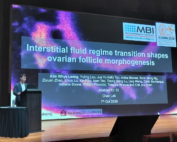
Chan lab members present their latest research at the International Conference on Mechanics in Medicine and Biology, Singapore!
Congratulations to Kosei for winning Best Oral Presentation, and to Kelly and Neha for their Poster Prize Awards!

WANG Tiantian
PhD Student, Class of August 2026

Sudha MERLA
PhD Student, Class of August 2026

FENG Shenlei
PhD Student, Class of August 2026

LI Xukuan
PhD Student, Class of August 2026

Ryu NG Zhi Xiong
PhD Student, Class of August 2026

Nandhini KRISHNAMURTHY
PhD Student, Class of August 2026

Sanchit KORDE
PhD Student, Class of August 2026

Hiroki James LEE
PhD Student, Class of August 2026

Saivishak SAIKUMAR
PhD Student, Class of August 2026

GUO Chongyuan
PhD Student, Class of August 2026

Daniya CHALIL
PhD Student, Class of August 2026

LIU Shuhong
PhD Student, Class of August 2026
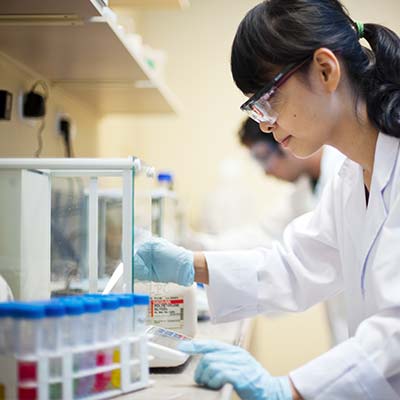
Seeking Research Assistant in the Confinement Mechanobiology Lab at the Mechanobiology Institute, NUS
The Mechanobiology Institute, NUS seeks to recruit a Research Assistant to Asst. Prof. Andrew Holle's Confinement Mechanobiology Lab.

About Linda J Kenney
The Kenney Lab pursues research in signal transduction and the regulation of gene expression in prokaryotes. In particular, they are studying the two-component regulatory system EnvZ/OmpR that regulates the expression of outer membrane proteins as well as many other genes. Their present work focuses on how OmpR activates genes required for systemic infection in Salmonella enterica.
Contact Us
Bacterial Pathogenesis & Signal Transduction Lab
Mechanobiology Institute (MBI)
National University of Singapore
T-Lab, #10-01
5A Engineering Drive 1
Singapore 117411
Phone: 6601 1285 ext 11285
Email: kenneyl@uic.edu
Web: mbi.nus.edu.sg/linda-j-kenney